This World Food Day, African farmers say El Niño makes rain impossible to trust
World Food Day, marked each October 16, asks a simple question: will there be enough nutritious food for everyone, now and in the future? This year, that question arrives alongside an approaching El Niño, and for millions of smallholder farming families across Africa, the answer depends on rainfall that no longer follows a pattern they recognize.
Ask a farmer in Kenya, Zambia, or Mozambique what has changed about the weather, and the answer rarely starts with “less rain.” It starts with, “We don’t know when rain will come.”
Across at least nine of the countries where KickStart International works with smallholder farmers, that uncertainty has become the crisis itself, not just the rain totals. And this year it is sharpening: meteorologists are forecasting one of the strongest El Niño events in decades, and KickStart’s field teams are already hearing from farmers who are worried, adjusting their plans, and in some cases losing crops before the season has properly begun.
KickStart’s U.S.-based team recently asked field staff across the region to share what farmers are telling them right now. Their answers, gathered over the past several weeks, describe a continent bracing for extremes in both directions: drought in some places, flooding in others. And in nearly every location, farmers said the planting calendar they had always trusted no longer holds.
Expand each country below to read what farmers and KickStart’s field staff are experiencing this season, in their own words.
Kenya
In Kenya’s South Rift, where farmers grow maize, beans, and vegetables around Bomet, Narok, and Kericho, the shift shows up as long dry spells breaking up what should be steady rains.
“We can no longer depend on the rain the way we used to,” one farmer told KickStart’s Mildred Tonje in the region. “When the rains come, we have to make the most of them and have a way of watering our crops when they stop.”
In Kenya’s North Rift, KickStart’s Carington Kabatha is hearing the same uncertainty from farmers trying to plan their season.
“The problem isn’t simply that there is less rain,” Carington said. “It is that rainfall is arriving at the wrong time, sometimes in extreme bursts, followed by unexpected dry and hot periods.”
“For them,” he added, “access to water is increasingly becoming a form of climate insurance.”
Some of those farmers are already responding by harvesting rainwater and turning to small-scale irrigation to bridge the gap. Kenya’s eastern counties are bracing for the opposite problem. Disaster management committees in Machakos are advising farmers to switch from quick-maturing mung beans to maize that can handle a longer, wetter season, while communities along the Tana River are preparing for the flooding that heavy El Niño rains reliably bring to that basin.
Mozambique
Mozambique may be facing an especially severe coming season.
“At the moment, the farmers are very worried because of the coming El Niño, which the government has predicted is the worst since 1950,” says KickStart’s Silvanos Zengueia. “They are being affected by cyclones, droughts, erratic rains, and floods.”
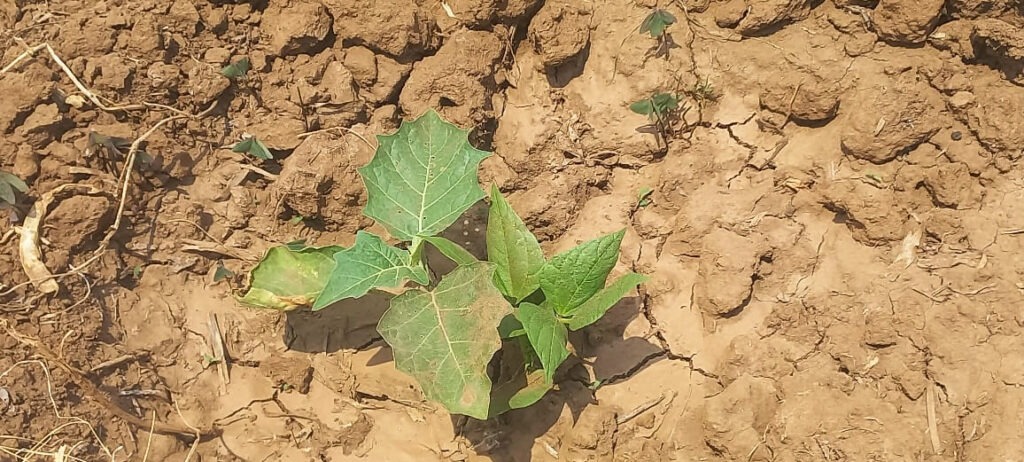
Silvanos says farmers in Gaza Province are still recovering from a 2026 flood that dropped a year’s worth of rain in 10 days, followed by a heat wave that scorched the replanted crops that survived it. Water isn’t the scarce resource there. Rivers and water bodies run through much of the province, but few farmers have the equipment to put that water to work.
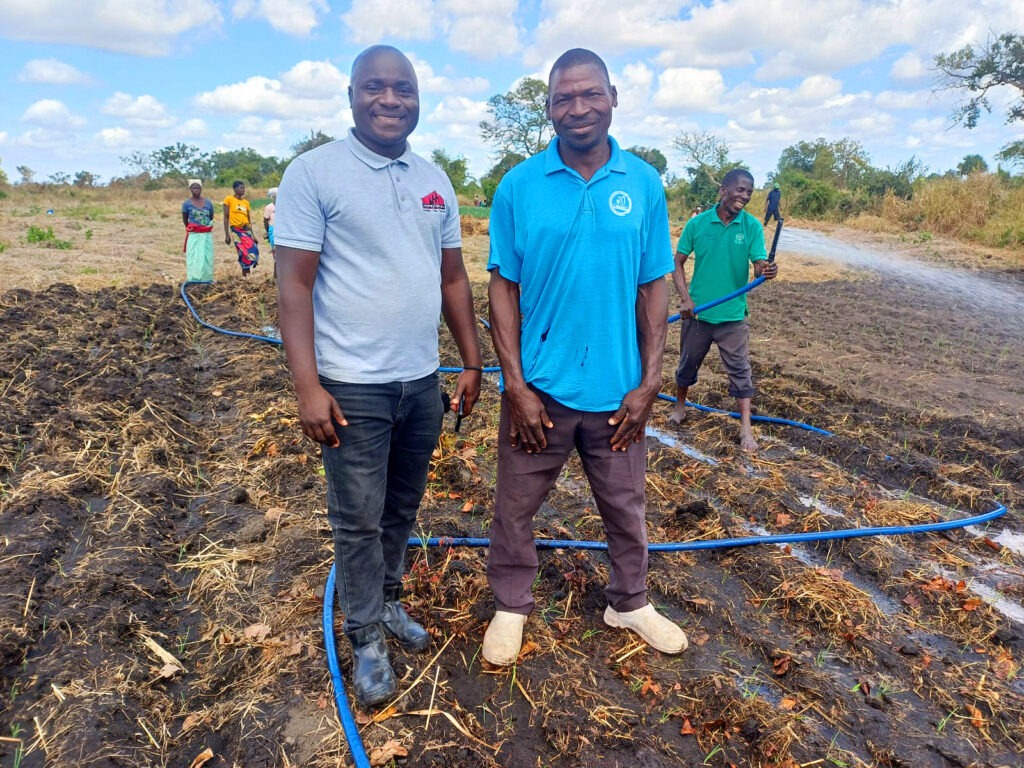
In central Mozambique, KickStart’s Alexandre Criston Zulu says growing uncertainty is the dominant feeling among farmers right now. He met with farmer Estâcio, below, in the field he is preparing for October’s planting; Alexandre says an irrigation tool is what would make farmers like him feel ready for what is coming.
Nigeria
Nigeria is seeing both extremes at once, according to KickStart’s Olusola Ojo, who works with vegetable, rice, and maize growers across the country’s north central, southwest, northeast, northwest, and south-south coastal regions.
“Rainfall has been erratic, unpredictable, associated with excess heat, sometimes insufficient to grow crops,” Olusola said. “Irrigation is normally applied to salvage the situation.”
In the country’s northeast, farmers in Adamawa state’s Gombi, Garei, Michika, and Mubi areas are contending with the opposite extreme: heavy downpours that have flooded their farmland.
“The weather is affecting access to their farms in areas that are waterlogged,” Olusola said. “In areas where we donated KickStart Starter Pumps, the farmers are making a significant difference until the onset of heavy rain.”
Many are switching from maize and millet to rice, which tolerates standing water, while farther north, tomato growers are fighting the opposite problem: heat and erratic rain disrupting flowering and fruit development, pushing them toward heavier irrigation just to hold their yields steady.
Rwanda
In Rwanda’s Rusizi District, farmers in the Bugarama Marshland are simply waiting. Season A should already be underway, but the rains have not arrived, and vegetable prices have climbed sharply as production has stalled.
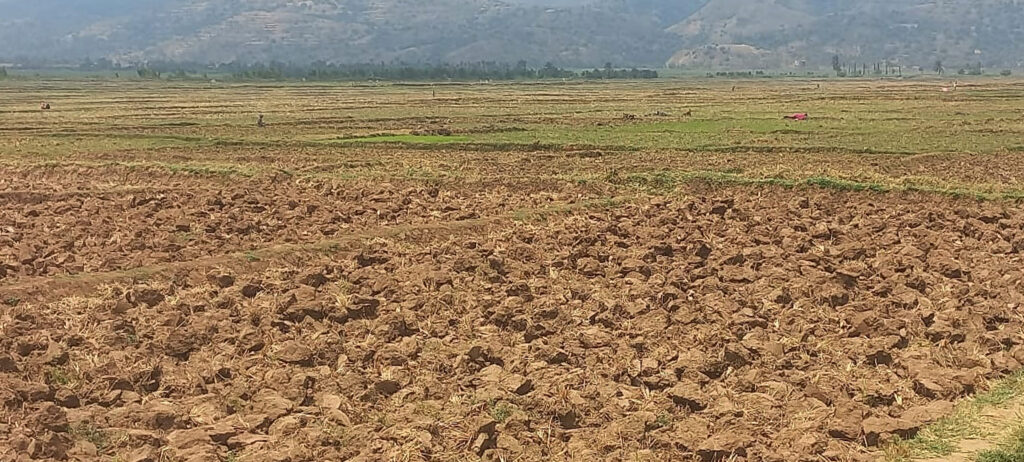
“Only a few farmers who have pumps are able to irrigate daily to keep their vegetables alive,” says KickStart’s Faustin Migisha.
Farmers there are torn between hoping the rains come soon and fearing that when they do, they will come too hard and too fast.
“The overall message from farmers is the need to shift toward year-round irrigation,” Faustin said. “This would help them keep planting regardless of rainfall patterns and reduce the risk of future hunger.”
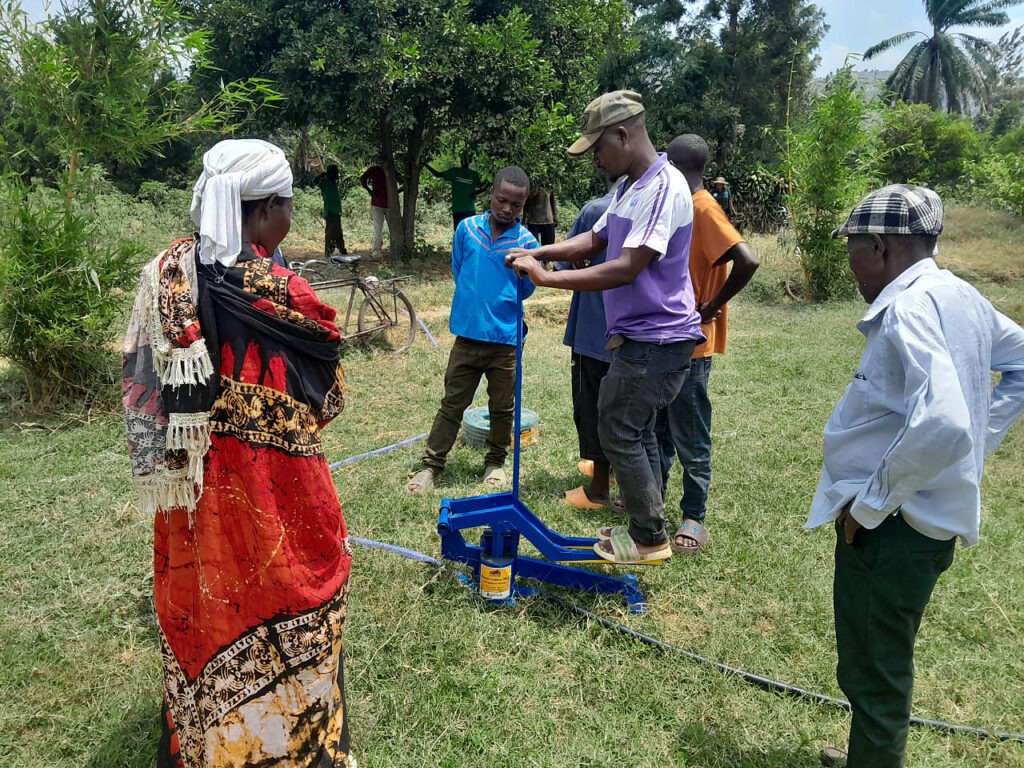
That demand is already showing up. This month, KickStart onboarded a new equipment dealer in the area, Uwineza Clementine, and farmers bought two irrigation pumps on the spot during her first demonstration.
Senegal
In Senegal’s Thiès region, women vegetable farmers working through local producer groups describe a narrower, more immediate version of that same problem: water that does not arrive on a schedule their crops can survive.
“When we have water, we can work,” one told KickStart’s Brou Etienne Tchiebley. “When the water stops, everything stops.”
These women aren’t simply asking for donations, Brou says. They see irrigation as a productive asset: with reliable access to water, they can produce more regularly, sell more, and reinvest in their farms.
Farther south in Casamance, the concern is less scarcity than control. Rain has been abundant there this year, but it comes in bursts followed by dry stretches, leaving farmers managing flood and drought within the same season. Farmers with reliable irrigation there can keep growing vegetables after the rains end, earning income when other farmers already have nothing left to sell.
South Sudan
In South Sudan, the stakes are especially high. Prolonged drought and extreme heat are already gripping Northern Bahr el Ghazal, Eastern Equatoria, Lakes, and Central Equatoria states.
“A failed rainy season is not simply an environmental crisis; it is a threat to food, income, and survival,” says KickStart’s Dagula Juma. “South Sudan will remain one of the most food-insecure countries due to conflict and El Niño-driven drought.”
Many crops have already dried up for lack of water, and parts of the country are facing a hunger crisis from this season’s losses even before the next planting season begins. Farmers are already anxious about what comes next, worried that drought and heat will repeat before they can recover this year’s losses.
The frustrating part, Dagula says, is that South Sudan is not short on water. Rivers, wetlands, and groundwater are abundant. What is missing is an affordable way to get that water onto a farm.
Tanzania
In Tanzania’s Kagera region, banana and coffee farmers describe the same erratic pattern seen almost everywhere else, according to KickStart’s Innocent Meney.
“Rainfall has become less predictable,” one Kagera farmer said. “Sometimes we receive heavy rain for a short period, then experience long dry spells.”
That leaves farmers anxious about how the coming season will treat two crops that do not recover quickly from a missed watering. Farther south in Dodoma, maize and sorghum farmers are already shifting toward more drought-tolerant varieties and looking for ways to stretch whatever water they have, Innocent says.
Tanzania’s meteorological agency has issued its own seasonal forecast, but many farmers remain skeptical, according to KickStart’s Jovita Nsumilinda, who works in the country’s western zone. Years of predictions that didn’t hold up locally have left some wary of preparing too heavily for a season that may not arrive as forecast.
Uganda
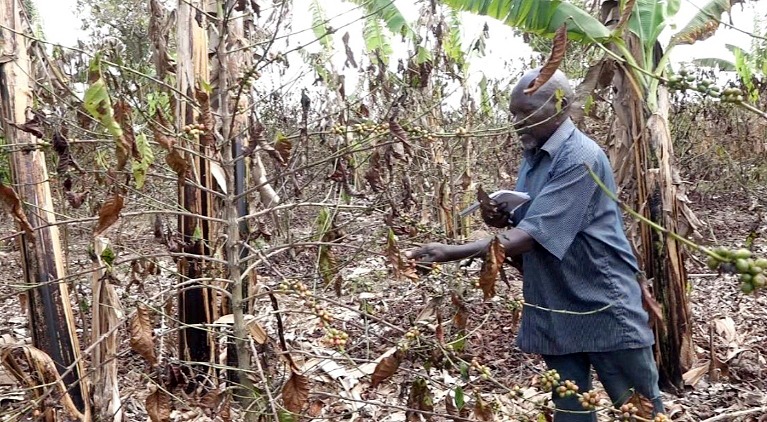
Uganda’s coffee belt is watching its trees struggle. In the Masaka-Kyotera area, coffee needs steady moisture during flowering and fruit development, and this year’s longer dry spells are causing flowers and young fruit to drop before they mature.
“The rain can no longer be trusted like before,” one farmer told KickStart’s Edward Boomera.
With few reliable water sources nearby, mulching and shade are about all most coffee growers can do on their own. A small pump paired with stored rainwater could change that, letting farmers water their trees through exactly the weeks when flowers and fruit are most vulnerable.
Farther east, in the Busoga sub-region, vegetable and tomato farmers are reaching the same conclusion from a different crop.
“We can no longer depend on the rain like we used to, so we need another source of water if we want to keep farming throughout the year,” one farmer told KickStart’s Derrick Ssemyalo.
In Uganda’s cattle corridor, across the country’s west and south, the pressure shows up differently. Dams are drying up, and dairy farmers are selling off livestock for lack of water, according to KickStart’s Uganda staff. It is no longer simply about drought—it has become a question of access to water through the long dry season.
Zambia
Zambia is bracing for an early, intense season. KickStart’s David Chiyesu says the government has warned farmers to expect rains earlier than usual this year, likely wrapping up by early February 2027, and input costs are already climbing as farmers rush to secure early-maturing seed. David also points to rising crop and livestock disease, silting in streams and other water sources, and fields left infertile by flood-driven leaching.
In the Copperbelt and North-Western Province, the uncertainty is more basic.
“You can no longer depend on the rains the way we used to, because the seasons are changing,” one farmer told KickStart’s Dumbani Nachinga.
In Zambia’s Eastern Province, which borders Mozambique and Malawi, conditions vary sharply by district. Some areas see average rainfall, river valleys face harsher extremes, and in places prone to flooding, farmers have largely given up on vegetables in favor of rice, according to KickStart’s Memory Mtambo. Near some game reserves, farmers grow nothing at all, relying only on land where the rains still reliably come.
Closing the water gap
Across all the countries above, the question is the same: how do you keep farming when the sky won’t cooperate? In every account here, farmers are reaching for the same solution: dependable access to water.
Affordable irrigation is how they can achieve it. Less than 4% of Africa is irrigated, compared with more than 40% in Asia. That gap is exactly where climate adaptation efforts are focused: researchers at the McKinsey Global Institute recently found that irrigation delivers $7-$8 in benefit for every dollar invested, making it one of the most cost-effective tools available for helping farmers ride out extreme weather like this.
KickStart has put more than 425,000 pumps into farmers’ hands, and surveys show that farmers with KickStart pumps increase their incomes up to fivefold within 18 months. That reach compounds: to date, those pumps have helped 1.6 million people take a major step out of poverty, equipped farmers to generate $1.6 billion in new annual profits and wages, and enabled 16 million people to eat fresh fruits and vegetables.
An El Niño this severe will test every one of those gains. Every $40 donated to KickStart equips a person to lift themselves out of poverty forever, and farmers are already showing they’re ready to put that kind of investment to work. This month in Rwanda, for example, two pumps sold within minutes of a single demonstration. Given the chance to prepare, farmers take it.
This year’s World Food Day theme, set by the United Nations’ Food and Agriculture Organization, is “Innovate today. Nourish tomorrow.” It’s a call to solve hunger with practical tools now, not abstract promises for the future. For farmers facing El Niño, that innovation is simple—an irrigation pump lets them keep growing food when the rain does not arrive.
Over 18 million people across East and Southern Africa are at risk of hunger as El Niño takes hold. Every $100 puts an irrigation pump in a farming family’s hands, helping them feed their children and communities, whatever the weather brings.