From a bucket to five acres: How Linda built a breakthrough agribusiness in Kisumu
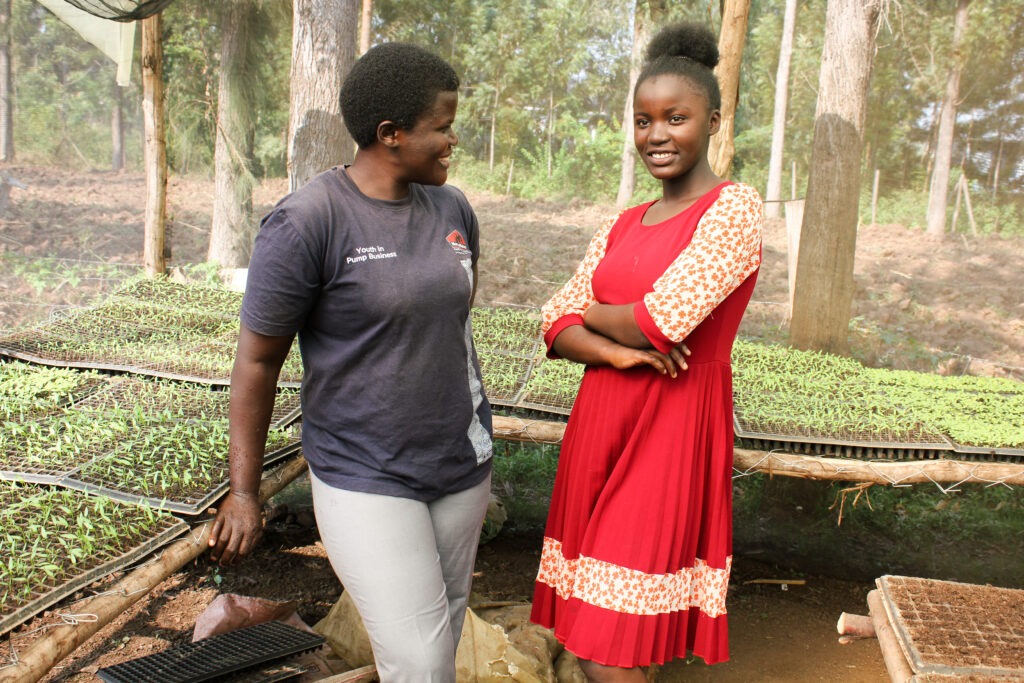
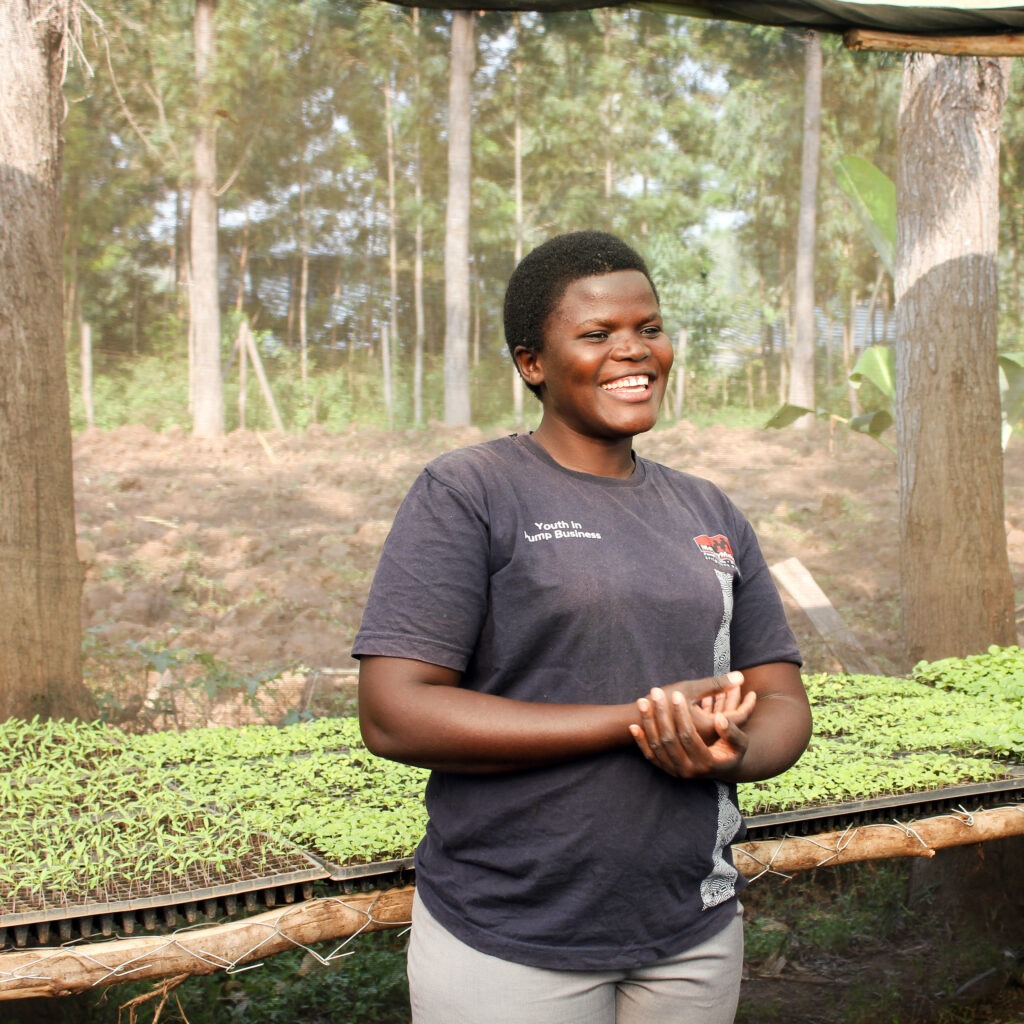
At 26, Linda Achieng left employment to start her own agribusiness, hiring a rundown greenhouse in Nyamasaria, Kisumu County and fixing it up with her own savings. She had a diploma in agriculture, a clear plan, and a bucket for irrigation. The work was physically demanding, and growth was slow.
That changed when Linda joined KickStart’s Rent to Try and Buy irrigation agent program in 2025 and traded the bucket for a MoneyMaker pump. Her seedling business took off quickly.
From 100 trays of seedlings, Linda scaled to 500, each holding 100 seedlings. Her production grew fivefold. She hired one full-time employee and brings in additional casual workers during planting season.
“The pump has made it possible to irrigate consistently and grow stronger, healthier seedlings,” Linda says.
That consistency is the foundation of her reputation. Before she had reliable water access, production depended on rainfall, which meant quality varied and supply was unpredictable. With the MoneyMaker pump, she can maintain soil moisture through dry periods and keep seedlings on a steady growth schedule. Buyers in Kisumu and neighboring counties noticed.
“Most of my clients come through referrals. They love my seedlings because of their high survival rate after transplanting,” Linda says.
High transplant survival rates matter to farmers because failed seedlings mean replanting costs, lost time, and delayed harvests. When Linda’s customers see results in their fields, they return and they tell others. That word-of-mouth demand is what allowed her to grow without heavy marketing investment.
Seedling income and pump rental revenue gave her a base to reinvest and expand her agribusiness. She now owns three pumps, renting them to nearby farmers for $1–2 per day. For many smallholder farmers, daily rental is the most viable entry point into irrigated farming, particularly during dry seasons when water access determines whether a crop survives.
From nursery to market farm
As demand for her seedlings grew, Linda looked for ways to scale production and diversify. She partnered with two other young farmers to lease land and grow vegetables together, sharing costs and labor rather than carrying all the risk individually. The arrangement is practical: pooling resources makes it possible to take on more land than any one of them could afford alone, while spreading financial exposure across the group.
Within months, their plot was producing kale, tomatoes, and chili peppers for Kisumu markets, supplying traders and households with fresh produce grown locally.
The numbers reflect how well the model works. On under one acre, the group harvests seven bags of kale each week, each weighing up to 100 kilograms. Kale sales alone generate between $160 and $230 per week, with additional income from other crops. Irrigation makes that output possible. The group plans harvests around reliable water access rather than rainfall and keeps production running through dry periods when other farmers scale back. That ability to supply consistently, even when rains fail, is a real advantage in local markets where fresh produce availability drops sharply during dry season.
Demand has grown steadily enough that the group is now expanding to five acres.
A diversified agribusiness, built step by step
Linda runs several income streams alongside the vegetable farm and pump rentals. Her nursery continues to supply seedlings across the area. She also sets up vertical and cone gardens, helping farmers in peri-urban areas get productive use from smaller plots where land is limited. Pig farming rounds out her agribusiness portfolio.
Each activity reinforces the others. Seedling customers become pump rental clients. Pump rental clients send referrals back to the nursery. The network grows through relationships, not advertising. Reliable water access sits at the center of it all, keeping production consistent across seasons and giving Linda the reliability her customers depend on.
The five-acre expansion is the next step. More land under cultivation means more produce to sell, more demand for seedlings to plant it, and potentially more pumps in the rental network. Irrigation will remain essential for maintaining the yields and supply consistency that have built her market.
Linda’s story is one example of what becomes possible when a young farmer with training, skills, and ambition has access to the right tools: an agribusiness rooted in local demand, growing steadily on her own terms.